Which Soil Moisture Meter Do You Actually Need? A Brutally Honest Breakdown
This article contains affiliate links — if you buy through them, we earn a small commission at no extra cost to you.
GardenVerdict synthesizes Reddit discussions and YouTube reviews to surface what real growers actually use — and we may earn a commission if you buy through our links.
Here’s what almost nobody tells you before you buy: that $12 probe meter from Amazon isn’t measuring moisture. It’s measuring electrical conductivity — the soil’s ability to carry a tiny current. In standard potting mix, conductivity correlates reasonably well with moisture. But in the chunky, aerated mixes that serious indoor growers prefer — perlite-heavy blends, coco coir, bark — it fails completely. Air gaps register as “bone dry” even when moisture is present.
u/SpringCleanMyLife on r/houseplants put it plainly: “Depends on your soil, since it’s not a measurement of moisture but rather electrical conductivity. None of my meters can properly read my highly aerated grittier soil because there’s too much air in it.”
That single comment explains why Reddit threads on soil moisture meters are split between “works great!” and “totally useless!” — they’re usually describing different soil types. Before buying anything, answer three questions.
Three Questions Before You Buy
1. What soil mix do you use?
- Standard potting mix (Miracle-Gro, generic garden center bags) → conductivity probes work fine
- Chunky or aerated mixes (perlite > 30%, bark, coco coir, LECA) → you need a tensiometer, or skip meters entirely
2. How experienced are you with your plants?
- New to plant ownership → a meter helps you build watering intuition; treat it as training wheels
- Experienced grower → you’ve probably already discovered that pot weight or a finger tells you more
3. What’s your scale and seriousness?
- Casual collection of tolerant houseplants → cheap probe or nothing
- Serious indoor grower managing multiple containers → one tensiometer per pot makes sense
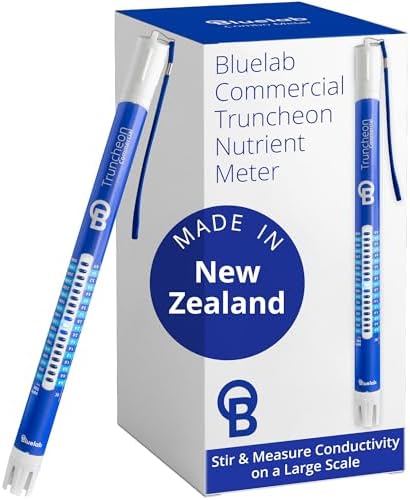
- Commercial or hydroponic operation → Bluelab Pulse territory
Your answers map to one of three tiers below.
Tier 1: Standard potting mix, keeping it simple
XLUX XT-9118 Soil Moisture Meter — $10–$15
With over 60,000 Amazon ratings at 4.5 stars, the XLUX is the category’s de facto standard for a reason. No batteries, color-coded 1–10 dial (dry / moist / wet zones), 7-inch probe, and instant readings. For mainstream potting soil and raised beds, it does what it says.
Use it as a training tool, not a permanent fixture. The experienced growers on Reddit consistently describe cheap probes as diagnostic training wheels. u/mds5118 on r/indoorgardening laid out the expected progression: “Any of the standard green colored ones on Amazon do a pretty good job of telling you the current moisture. Honestly, you should just learn to stick a finger knuckle deep into the soil… over time you’ll learn to spot the soil color with your eyes and you won’t need a meter or a finger test.”
The main quirk: the needle sometimes sticks on “dry.” u/borisonmyfinger on r/houseplants documented the fix: “I’ve managed to make it work by literally giving it a good couple of firm taps against my palm to shake the needle loose. Seems to get stuck all the way over on ‘dry’ pretty often but if I whack it against my palm a bit until the needle begins to look ‘wiggly’ again, then stick the probe into the soil, the needle is able to move across the whole range.” Annoying, but solvable.
Don’t leave it permanently in soil — the probe corrodes, and it’s not designed for that.
Pros
- No batteries; instant color-coded reading
- Over 60,000 verified buyers at 4.5 stars
- Works well in standard potting soil and garden beds
- Best value entry point for beginners
Cons
- Measures conductivity, not actual moisture — fails in chunky mixes
- Needle-sticking is a known issue requiring the palm-tap workaround
- Not rated for permanent soil installation
SONKIR MS02 3-in-1 Soil Tester — $12–$18
Add a few dollars to the XLUX and you get rough pH and light readings alongside moisture. If you’ve wondered whether your windowsill actually delivers enough sun, or whether your soil is running too acidic, the SONKIR gives you directional answers from one battery-free tool.
The emphasis is on “directional.” u/trit19 on r/indoorgardening noted: “I’ve tried using it for pH and light but I’m still inexperienced so I’m not really sure what I’m looking for.” The moisture sensor is the most reliable of the three functions. The pH reading takes hours to stabilize and is better described as a rough estimate than a precise measurement — if you need accurate pH data, a dedicated meter is the honest answer.
Buy the SONKIR if you want a single tool that satisfies gardening curiosity across multiple dimensions. Skip it if pH precision is the goal.
Pros
- Moisture, pH, and light in one battery-free tool
- 7.9-inch probe handles both pots and garden beds
- Good starter tool for hobbyists who want broader plant context
Cons
- pH reading is approximate; hours to stabilize
- Same conductivity limitation as other probe-type meters in aerated soils
- Light reading is directional, not calibrated
Tier 2: Chunky mixes or genuine accuracy
Irrometer Tensiometer LT — $50–$100
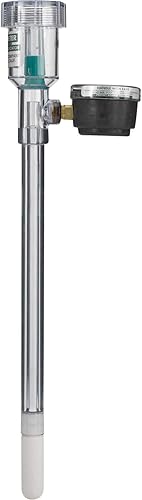
This is where the category splits in two. The Irrometer measures water tension — the actual suction force roots must exert to pull water from soil particles. That number is meaningful in every soil type, including coco, perlite blends, and bark mixes where conductivity probes fail entirely.
u/hausmusik on r/NoTillGrowery gave the most thorough endorsement in the research: “Irrometer tensiometer LT, complete game changer. Once they are set up correctly they will help you keep a perfect moisture level. They helped me also discover dry spots in my soil that I would have never known about — areas that went hydrophobic… It opened my eyes to how wrong I was just watering all of my plants the same on a set schedule — some plants end up drinking far more water than others.”
The analog dial is always visible at a glance — no button to press, no screen to unlock. That matters when you’re checking six pots quickly.
Setup is non-negotiable. Pull the unit out, fill the hole with a water-soil slurry, replace it. Small air gaps between the ceramic tip and soil cause false “dry” readings, which triggers overwatering. Budget for Irrometer’s field service kit to remove air bubbles after installation.
How does the Blumat Digital compare? It’s also a tensiometer, and it used to be the more affordable option. But it’s roughly doubled in price and carries a structural flaw: there’s essentially no way to assemble the Blumat without trapping an air bubble, and that bubble grows over time until readings drift. A commenter on r/NoTillGrowery summarized it: “You can get a few months of good readings out of a Blumat meter, but the Irrometer is more stable in this way.” At current prices they’re comparable — but not in quality. The Irrometer wins the tier.
Pros
- Measures actual water tension, not conductivity — works in all soil types
- Analog dial always readable at a glance, no button required
- Reveals hydrophobic zones and dry pockets other methods miss
- More stable long-term than the Blumat Digital
Cons
- Significantly more expensive than probe meters
- Requires careful installation with the slurry method and field service kit
- One per pot is ideal — adds up fast for larger collections
Tier 3: Commercial scale or data-driven growing
Bluelab Pulse Moisture Meter — $150–$200

The Bluelab Pulse measures moisture, temperature, and nutrient levels (EC/TDS) simultaneously. Bluetooth syncs all readings to a smartphone app for historical tracking. An adjustable depth gauge ensures consistent measurement depth across different containers, and a vibration alert confirms successful data capture. It integrates with the full Bluelab ecosystem (pH and EC meters) for nutrient management at grow-room scale.
The Aggra Gadget Picks YouTube reviewer described it as “ideal for soil, coco coir, potting mixes, and hydroponic systems… for growers managing multiple plants or larger growing environments.” That’s accurate. For commercial growers or serious indoor cultivators who need EC data to drive feeding schedules, this is the right tool.
For everyone else: the Irrometer delivers accuracy at a fraction of the price without the $150 premium.
Pros
- Moisture, temperature, and EC/TDS in one reading
- Bluetooth app with historical tracking
- Works across soil, coco, and hydroponic media
- Built for durability; integrates with Bluelab ecosystem
Cons
- Premium price — overkill for home gardeners
- Requires smartphone for full feature use
- Significantly more expensive than the Irrometer for moisture-only needs
The Free Alternative (That Experienced Growers Actually Use)
Before spending anything, consider: the most consistently praised technique across all five Reddit threads is the lift test. Pick up your pot right after watering and feel the weight. Pick it up again when you think it needs water. Within a few weeks, you’ll have internalized what “needs water” feels like for every pot you own.
For plants in deeper containers where a finger can’t reach the root zone, the bamboo skewer method works well. u/putitinapot on r/houseplants called it “The Magic Stick”: “I stick it all the way down in the pot to the bottom, twirl it a little, then remove it. If it’s damp and/or soil is stuck to it, then no water for you. It’s like an oil dipstick.”
Multiple experienced growers on r/indoorgardening mentioned buying meters and stopping using them. That’s not a knock on meters — it’s just the natural endpoint. Meters are training tools. Once the intuition is built, they get retired to a drawer.
Side-by-Side
| Meter | Price | Technology | Works in Chunky Mix | Leave in Soil? |
|---|---|---|---|---|
| XLUX XT-9118 | $10–15 | Conductivity | No | No |
| SONKIR MS02 | $12–18 | Conductivity | No | No |
| Irrometer LT | $50–100 | Tensiometer | Yes | Yes (with setup) |
| Blumat Digital | $40–70 | Tensiometer | Yes | Yes (bubble risk) |
| Bluelab Pulse | $150–200 | Volumetric + EC | Yes | No (handheld) |
If You Read Nothing Else
Standard potting mix, new to plants: Get the XLUX XT-9118 Buy on Amazon. Costs less than two lattes, requires zero setup, and will train your eye within a season. Just don’t leave it in the soil.
Chunky or aerated mix, or serious container grower: The Irrometer Tensiometer LT Buy on Amazon is the only meter that earns its price in this category. Plan for proper installation and one unit per pot.
Commercial grower or hydroponic data nerd: The Bluelab Pulse Buy on Amazon is built for you specifically. For everyone else, it’s too much tool.
And if you’ve been keeping plants for a few years already? Lift the pot. You probably don’t need any of them.